


ITR Filing for Salaried Employees in India – Complete Step-by-Step Guide (2026)
ITR filing for salaried employees is often misunderstood as “simple” tax work. In reality, salaried taxpayers are among the most frequently flagged for mismatches due to incorrect deductions, wrong tax regime selection, or AIS discrepancies.
In 2026, income tax filing for salaried individuals in India is no longer just about Form 16. The Income Tax Department already has access to your salary details, bank interest, investments, and high-value transactions through AIS and TIS.
This guide explains:
How ITR filing for salaried employees in India actually works
Which ITR form salaried employees should use
How to file ITR online correctly
Common mistakes salaried employees make
Whether you should use a calculator or professional help
How Taxgoodwill Consultants assists salaried taxpayers
This is a fully informational guide, not a shortcut manual.
Who Is Considered a Salaried Employee for ITR Filing?
You are treated as a salaried employee if:
You receive salary from an employer
TDS is deducted under Section 192
You receive Form 16
This applies even if:
You changed jobs during the year
You have additional income (interest, rent, capital gains)
You worked from home or remotely
ITR filing for salaried employees becomes complex the moment income is more than “salary only”.
Is ITR Filing Mandatory for Salaried Employees?
Yes, ITR filing is mandatory for salaried employees in India if:
Total income exceeds the basic exemption limit
You want to claim a refund
You have foreign assets or income
You deposited large amounts in banks
You want to carry forward losses
Even if tax is fully deducted, ITR filing for salaried employees in India is still required in many cases.
ITR Forms for Salaried Employees – Which One to Select?
One of the most searched questions is “ITR 1 for salaried employees”.
ITR 1 (SAHAJ)
You can use ITR 1 filing if:
Income is up to ₹50 lakh
Income is from salary or pension
Income from one house property
Other income like interest
You cannot use ITR 1 if:
You have capital gains
You have foreign income
You hold unlisted shares
ITR 2
Used when salaried employees also have:
Capital gains
More than one house property
Foreign income or assets
Selecting the wrong form leads to defective return notices.
Select Filing Type in ITR for Salaried Person
When filing ITR online, salaried employees must select:
Individual
Resident / Non-Resident status correctly
Correct tax regime (Old or New)
This step is often ignored and later causes tax recalculation issues.
Old Tax Regime vs New Tax Regime for Salaried Employees
Choosing the right regime is critical in ITR filing for salaried employees.
Old Tax Regime
Allows deductions (80C, 80D, HRA, LTA)
Suitable for employees with investments
New Tax Regime
Lower slab rates
Fewer deductions
Default option in 2026 unless opted out
A mistake here can increase tax liability silently.
ITR Filing for Salaried Employees Calculator – Useful or Risky?
Many people use an ITR filing for salaried employees calculator to estimate tax. Calculators are helpful for:
Rough tax estimation
Comparing regimes
They are risky because:
They don’t check AIS mismatches
They don’t verify deductions
They don’t flag reporting errors
Calculators estimate. CAs verify.
Step-by-Step Guide: How to File ITR for Salaried Employees Online
Here is a clear guide on how to file ITR correctly.
Step 1: Collect Documents
Form 16
Salary slips
Bank statements
Investment proofs
AIS and TIS
Step 2: Check AIS & TIS
This step is critical in 2026. AIS may include:
Bank interest
Credit card spending
Investment transactions
Mismatch here leads to notices.
Step 3: Choose Correct ITR Form
Most salaried employees use ITR 1 or ITR 2.
Step 4: Compute Income & Tax
Include:
Salary
Allowances
Perquisites
Other income
Step 5: Claim Deductions (If Applicable)
Only under the old regime.
Step 6: File & Verify
Filing without verification is invalid.
This is the full ITR filing for salaried employees online process.
ITR Filing for Salaried Employees PDF – Is It Still Relevant?
Many users search for “ITR filing for salaried employees PDF”.
PDF guides are:
Useful for understanding basics
Often outdated
Not aligned with latest budget changes
In 2026, online filing with updated data review matters more than static PDFs.
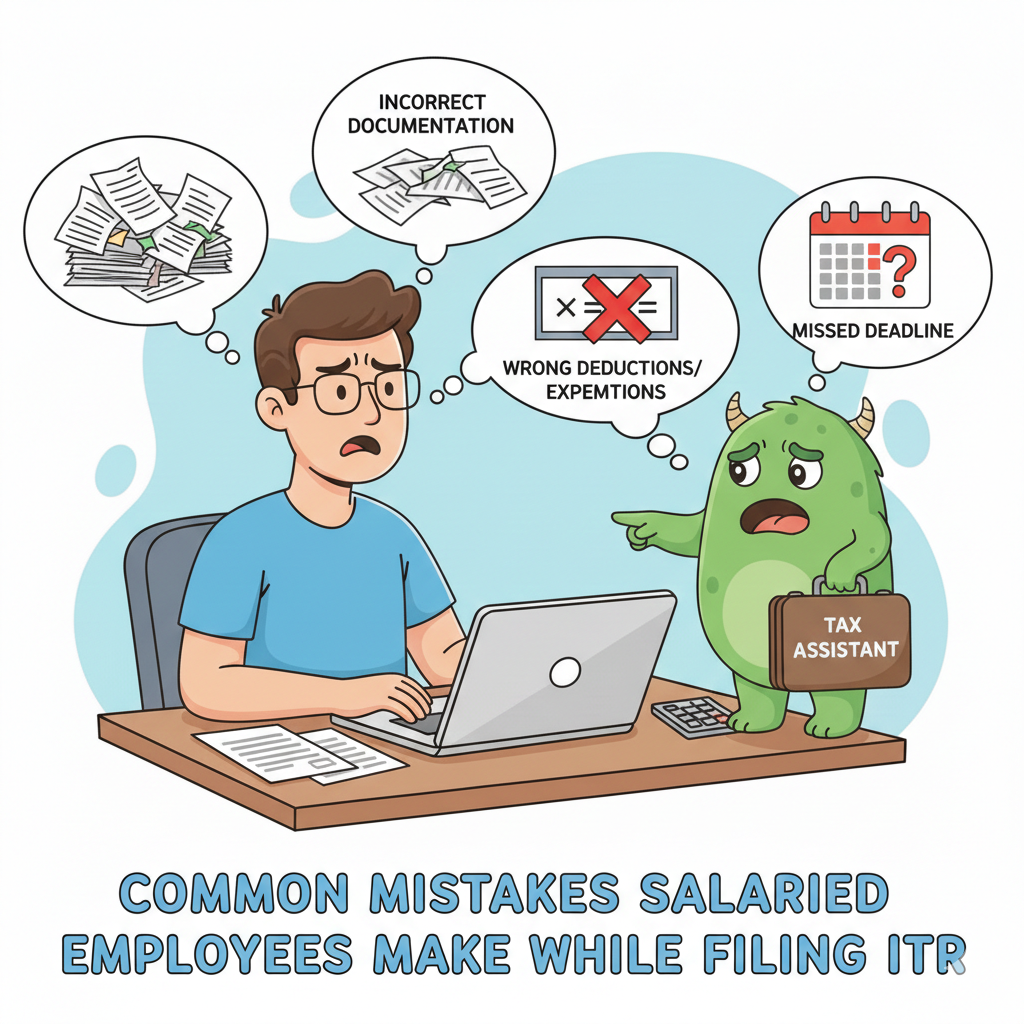
Common Mistakes Salaried Employees Make While Filing ITR
Most notices arise from:
Ignoring AIS
Choosing wrong tax regime
Claiming deductions not reflected in Form 16
Missing bank interest income
Filing wrong ITR form
These errors make ITR filing for salaried employees risky without review.
Why Professional Help Matters for Salaried Employees
Even salaried taxpayers now receive:
143(1) adjustments
Mismatch notices
Refund delays
A professional ensures:
Correct reporting
Legal tax saving
Post-filing support
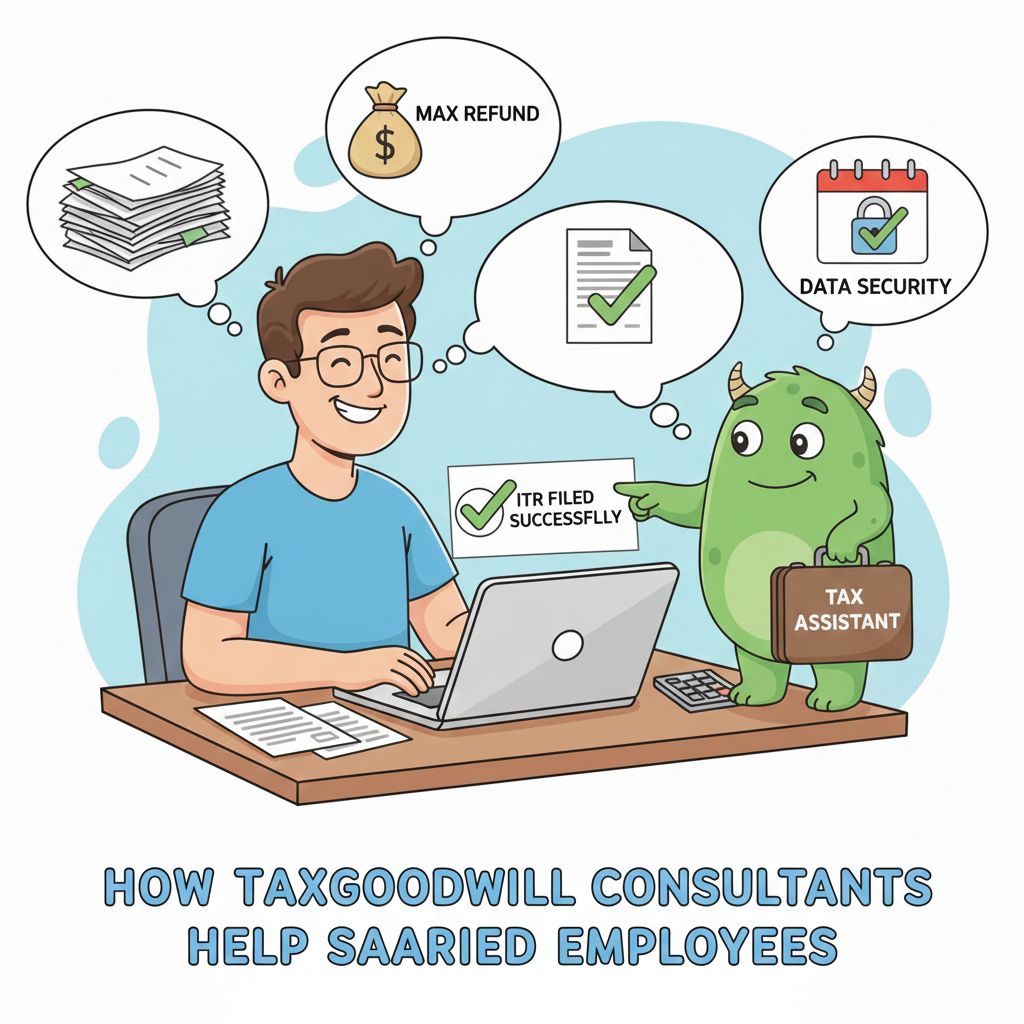
How Taxgoodwill Consultants Help Salaried Employees
Taxgoodwill Consultants assists salaried individuals with accurate and compliant ITR filing for salaried employees in India.
They help with:
Form 16 review
AIS & TIS reconciliation
Regime comparison
Correct ITR selection
Error-free filing
Notice handling support
This is especially useful for:
Employees with multiple incomes
Job changes
High-value transactions
Services for Salaried Employees by Taxgoodwill Consultants
Tax Planning & Advisory
Regime Selection Guidance
Refund Tracking
Income Tax Notice Handling
Online Consultation Across India
They focus on accuracy, not rushed filings.
ITR Filing for Salaried Employees – Contact Details
📞 Contact Number: 099110 21258
🌐 Website: www.taxgoodwill.com
📍 Office: Dwarka, New Delhi
📍 Service Coverage: Pan-India (Online)
Final Words for Salaried Employees
If you think ITR filing for salaried employees is “easy”, you are relying on luck, not law.
In 2026, filing is about:
Aligning with government data
Choosing the right regime
Avoiding silent mistakes
Correct filing protects you. Cheap filing exposes you.
